Fake Image: House overrun by leeches after floods actually AI-generated
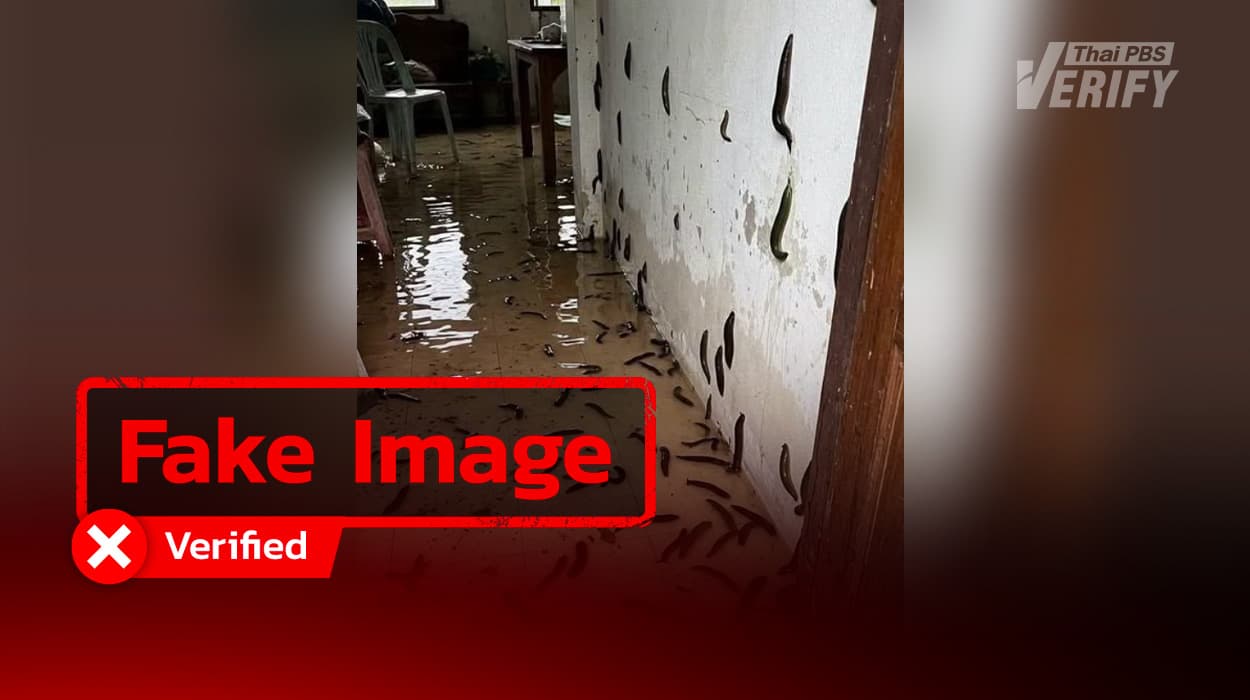
Thai PBS Verify identified Facebook as the origin of the falsified image.
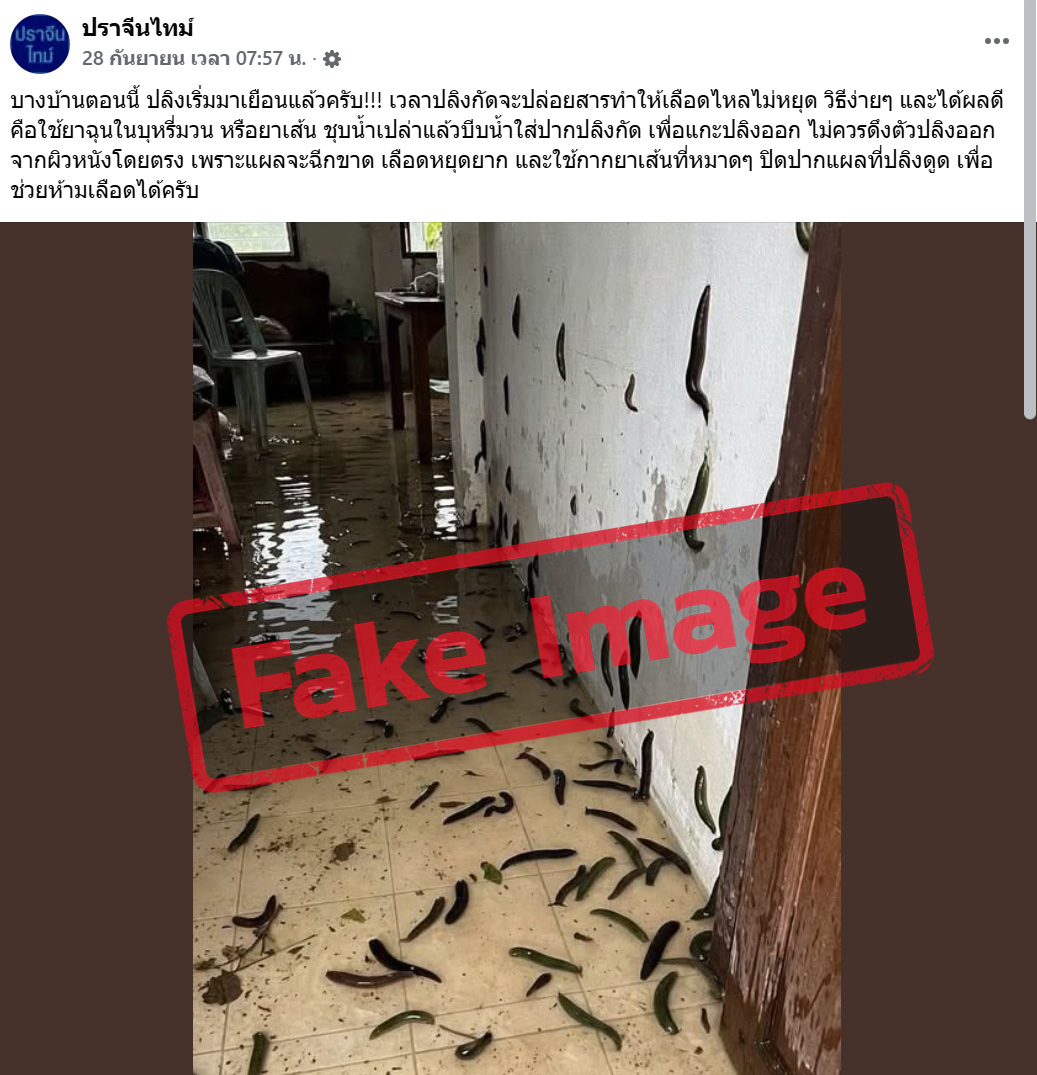
A post has emerged claiming that swarms of leeches were found inside a flood victim’s home following the 2026 floods.
Leeches are beginning to invade some homes. Leech bites release an anticoagulant that keeps blood flowing. To safely detach a leech, wet loose tobacco or cigarette tobacco with water and squeeze the juice onto its mouth. Avoid pulling the leech directly off the skin, as it may tear the tissue and make the bleeding hard to stop. Applying the damp tobacco residue over the wound will also help stanch the bleeding.
Published on September 28, 2026, the post received 6,200 reactions and was shared 913 times. Concurrently, the photo was featured across various media organizations, including Thairath.
Are the images of leeches infesting a home after the floods real?
A reverse image search using Google Lens has yet to reveal a clear or definitive source for the photograph.
Subsequently, the image was analyzed using the AI detection tool on Hive Moderation. The results indicated a 99.9% probability that the image was AI-generated, specifically identifying Gemini as the tool involved in its creation.
Consequently, the image was checked for the SynthID digital watermark using Gemini. The results indicated that the image was generated or may have been edited using Google’s AI.
Additionally, when the same image published by other accounts was tested using the same method, the results similarly indicated a likelihood of AI generation or modification.
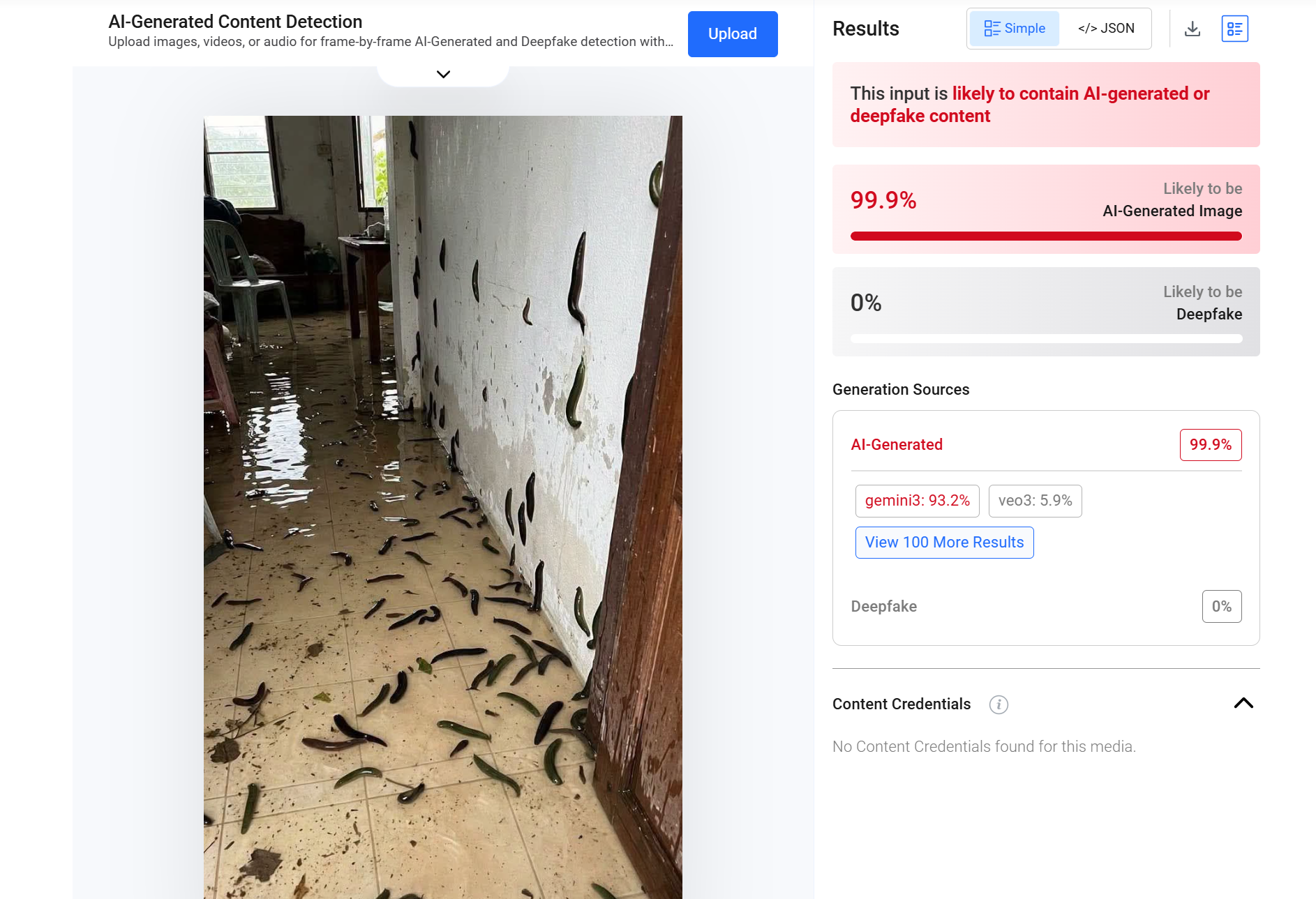
Additional verification using Sightengine showed a 99% probability of AI creation, with DeepAI likewise classifying the picture as fabricated.
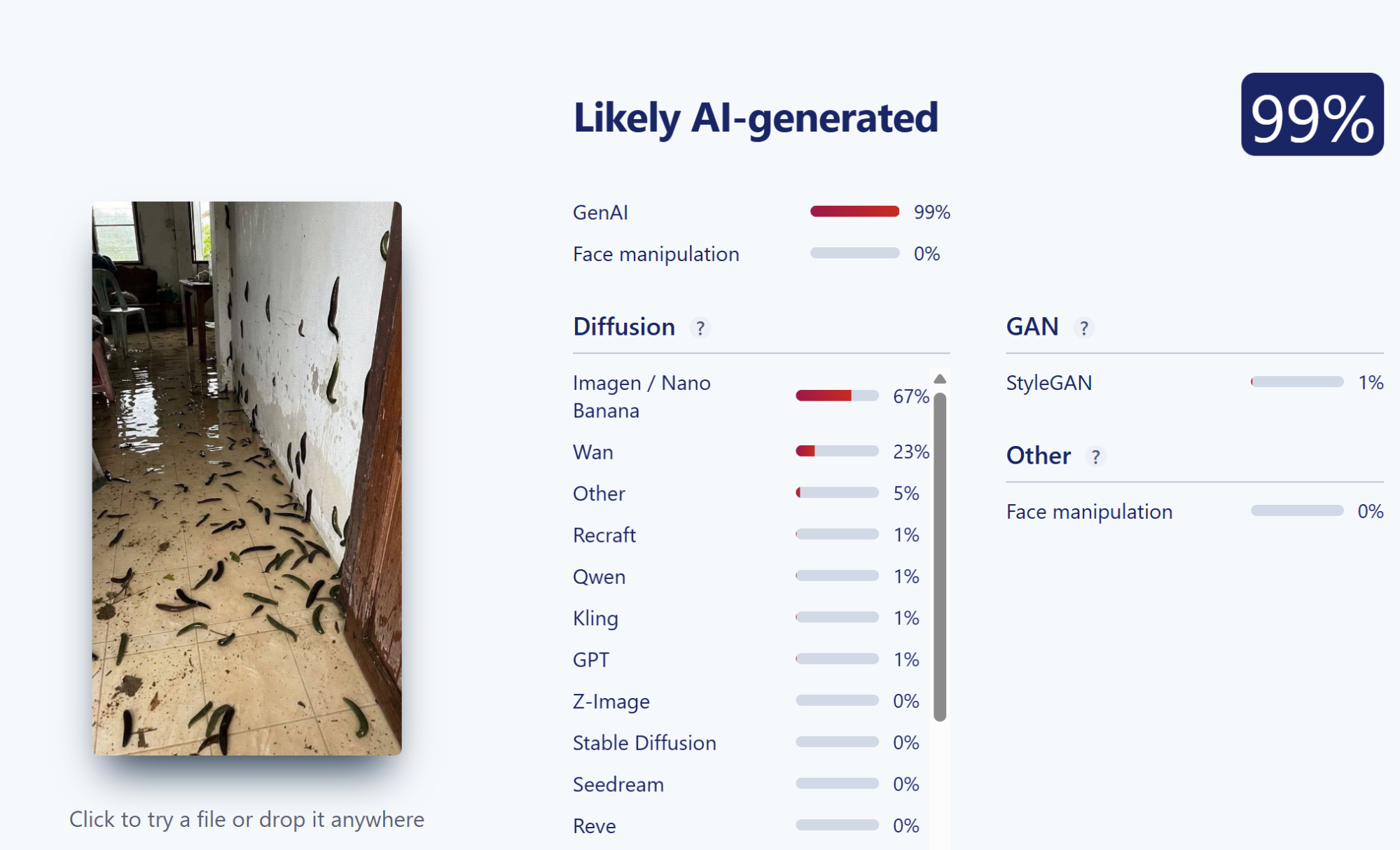
Sightengine found a 99% probability that the image was AI-generated.
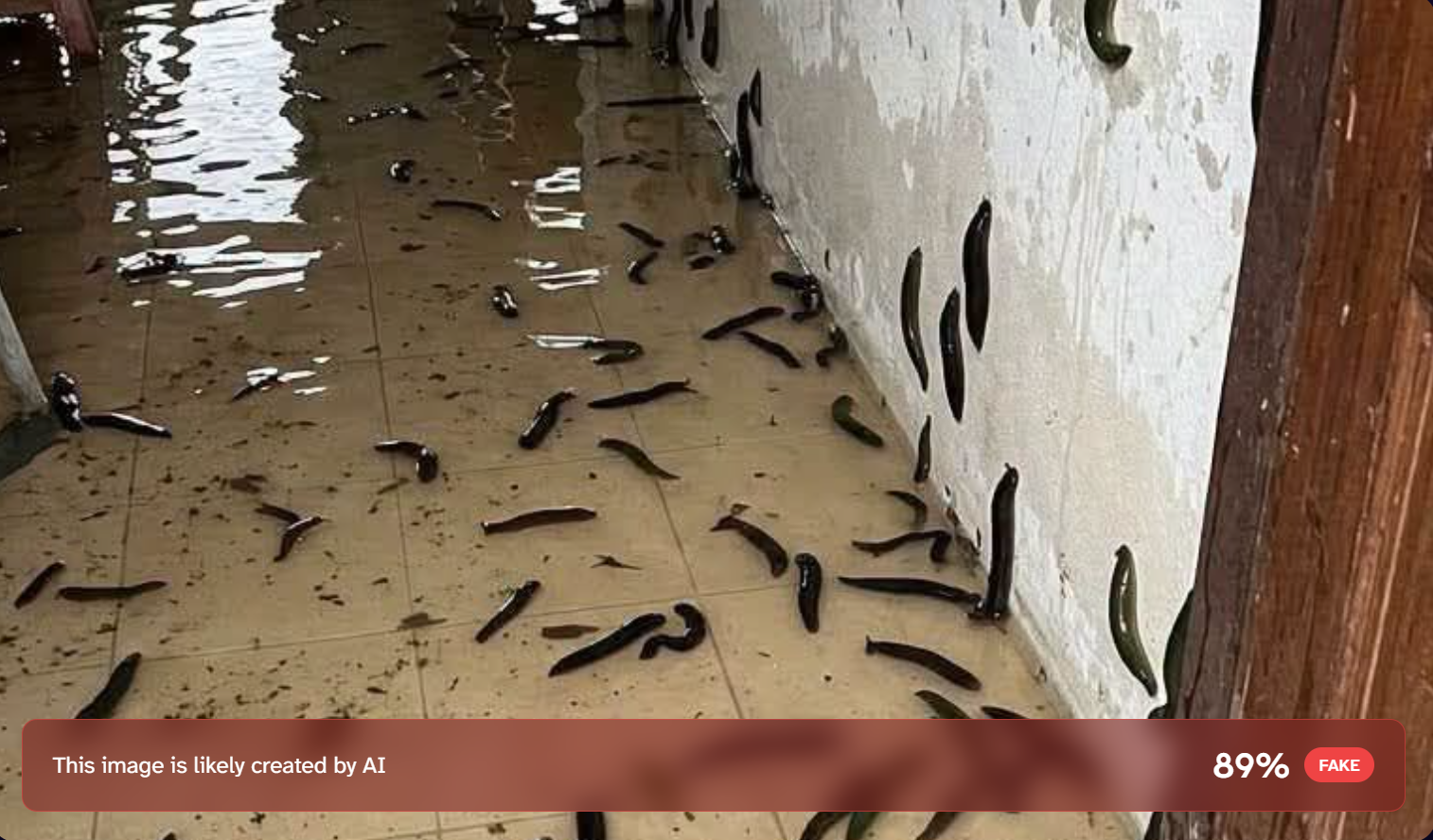
According to DeepAI’s inspection results, the photo is classified as a fake.
To trace the photo’s source, Thai PBS Verify reached out to the administrator of the ‘Prachin Time’ page. The administrator explained that they did not know the exact origin, having simply found the image as it circulated across social media.
Specialists state that the leech behavior displayed in the photograph is inconsistent with nature.
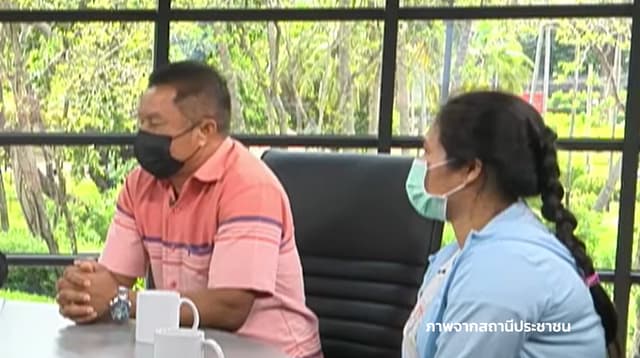
Subsequently, Dr. Krittiya Treevalairat, a lecturer in the Department of Microbiology at the Faculty of Science, Mahidol University, was consulted. She stated that it could not be confirmed whether the creatures in the image were actual leeches due to the poor image quality. However, she noted that based on their natural behavior, leeches are aquatic animals. While they can survive on land for a certain period, they generally avoid drying out. When their environment becomes dry, leeches experience stress and are more likely to move toward damp areas rather than crawling up dry beams or walls.
Additionally, Dr. Krittiya noted that some of the creatures in the image resemble slugs, featuring two distinct eyestalks. She pointed out that slugs typically inhabit forests, muddy grounds, or damp, vegetation-covered areas.
Nevertheless, looking closely at the specimens attached to the wall, they bear a closer resemblance to leeches than slugs, as slugs feature prominent eyestalks a characteristic absent in leeches.
“The way the leeches cling in the photo is quite peculiar. While they can adhere to vertical walls, they typically avoid resting or attaching to dry environments.”
Experts note that the overall features resemble leeches rather than slugs, as the red-circled areas lack the eyestalks characteristic of slugs. While shaped like leeches, such behavior does not align with their natural habits, making the image unrealistic.
What is the actual truth?
The image claiming to show leeches inside a flood victim’s home after the flood is likely AI-generated or modified. Multiple verification methods yielded consistent results: AI detection tools from various websites, along with a SynthID check, all indicated signs that the image was created or edited using Google AI.
Moreover, a microbiology expert pointed out that the creatures clinging to dry surfaces exhibit behavior inconsistent with natural leech tendencies.
Verification Process
- Google Lens Verification: A reverse image search conducted via Google Lens did not reveal a clear or definitive source for the image.
- AI Analysis: Further testing using Hive Moderation, Gemini’s SynthID watermark detection, Sightengine, and DeepAI confirmed the image to be an AI-generated fake.
- Consulting an Expert: Dr. Krittiya Treevalairat from the Department of Microbiology, Faculty of Science, Mahidol University, noted that naturally, leeches are aquatic organisms. Although they can endure being out of water briefly, they avoid desiccation. In dry environments, they become stressed and tend to seek out moisture rather than climbing dry structural beams or walls.
The Impact of This Misinformation
- Misrepresentation of Post-Flood Conditions: The use of a suspected AI-created image to claim a genuine occurrence may cause the public to incorrectly assume that large numbers of leeches entered homes after the floods, despite a complete lack of evidence regarding the photo’s origin.
- Inducing Panic in Times of Crisis: Depictions of massive wildlife intrusion can heighten anxiety among flood-affected populations, particularly those navigating real emergencies who require accurate safety information.
- Widespread Sharing of Unverified Information: When an image is presented alongside a descriptive caption, it may lead audiences to mistakenly believe that the information has been officially verified, prompting them to share it further without checking its source
- Obscuring Real-AI Distinction: Integrating unlabeled AI images with authentic news reports increases the difficulty for viewers to determine whether visual content is a real occurrence or a generated illustration.
What to do with this misinformation?
- Avoid Believing or Sharing Based Solely on Images: If a photo depicts unusual events—especially those related to disasters—always verify supplementary details, such as the location, date, time, photographer, or confirming authorities, before passing it on.
- Check Image History: Use Google Lens or similar lookup tools to trace prior appearances. If no original source is identified, do not hastily conclude that it is a current photograph.
- Spot Anything Unusual and Use AI Tools for Backup: Pay close attention to details like the animals’ shapes, how they cling to surfaces, lighting, shadows, or anything that looks unnatural. You can use extra AI detection tools, but try to use a mix of methods because results from a single AI detector shouldn’t be your only proof.
- Verify Data with Local Authorities and News Outlets: Whenever a situation involves flooding, cross-reference the claims with official statements from government agencies, local municipalities, or credible news organizations reporting directly from the affected areas.
- Separate Visuals from Accompanying Caption Advice: Even if an image is authentic, it does not mean that the text or recommendations accompanying it are entirely correct. Health or first-aid advice should always be verified with public health agencies or medical professionals before being applied, especially in cases involving wounds or animal bites.